CMMS Success

What Is CMMS Success And How Do You Achieve It?
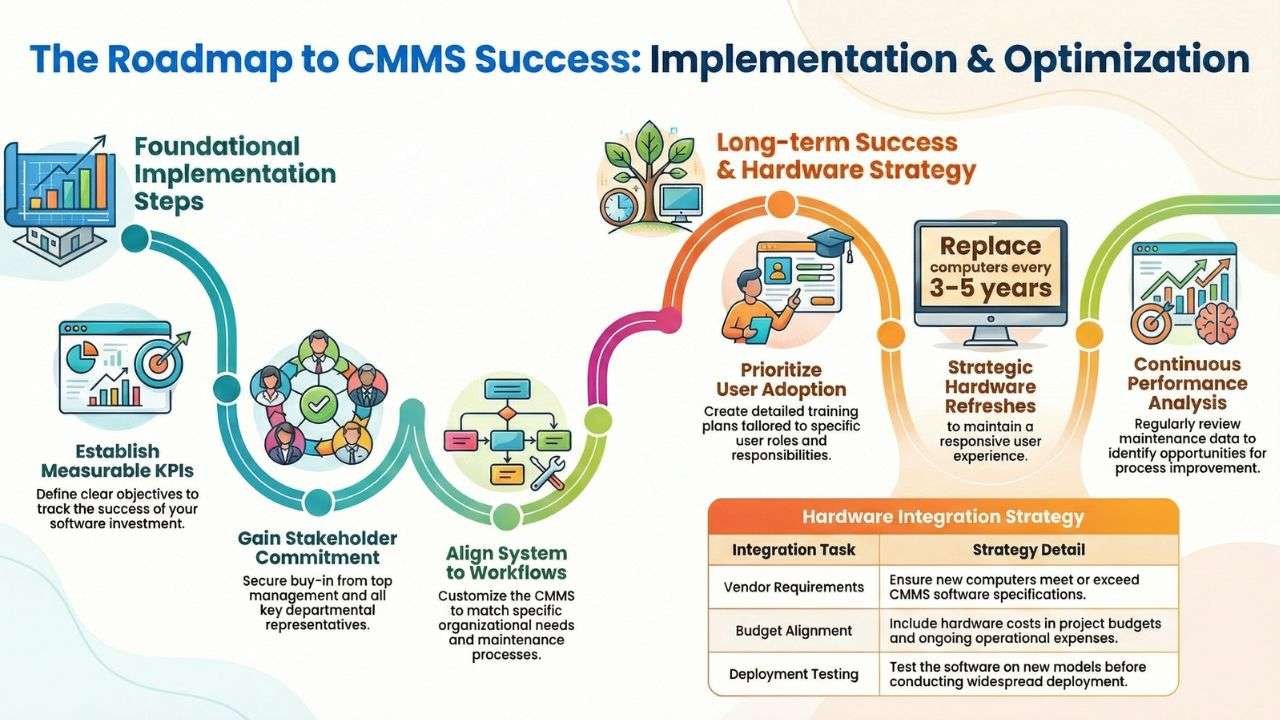
To achieve CMMS success and unlock the full potential of your software investment, below are 18 goals you can work towards:
- Define clear objectives and measurable key performance indicators (KPIs) for your CMMS implementation.
- Gain buy‑in and commitment from top management and all relevant stakeholders.
- Establish a dedicated CMMS implementation team with representatives from all key departments.
- Conduct a thorough analysis of your current maintenance processes and workflows.
- Customise the CMMS to align with your organisation’s specific needs and requirements.
- Develop a comprehensive data migration plan to transfer historical data into the new system.
- Create a detailed training plan for all users, tailored to their roles and responsibilities.
- Ensure proper setup and configuration of the CMMS, including asset hierarchies, preventive maintenance and materials management.
- Integrate the CMMS with other systems, such as process control or production automation systems, where applicable.
- Develop standardised procedures and best practices for effective CMMS use.
- Encourage user adoption through ongoing training, support and change‑management initiatives.
- Regularly review and optimise maintenance processes and workflows within the CMMS.
- Leverage the CMMS for data‑driven decision‑making and continuous improvement.
- Establish robust security protocols and user access controls to protect sensitive data.
- Implement a structured system for tracking and resolving issues or bugs.
- Regularly back up and maintain the CMMS database to ensure data integrity.
- Stay up-to-date with software updates, patches and new features from the vendor.
- Continuously measure and analyse performance to evaluate CMMS success and identify opportunities for improvement.
The Hardware Side Of Things.
Upgrading and replacing company desktop and laptop computers on a regular basis can help maintain high user satisfaction when using CMMS software, but it is not necessarily an essential goal for achieving CMMS success.
Having up‑to‑date hardware with sufficient processing power, memory and graphics capability contributes to a smooth and responsive CMMS experience.
Older or under‑powered computers may struggle to run the software efficiently, leading to frustration and reduced productivity.
However, it’s important to balance hardware currency with cost management.
A refresh cycle of every 3–5 years is commonly recommended for business computers, though the optimal timeline will depend on your organisation’s budget, workloads and the CMMS vendor’s system requirements.
Rather than treating hardware as a standalone goal, consider incorporating it into your broader CMMS implementation and maintenance plan.
For example:
- Assess hardware requirements specified by the CMMS vendor and ensure new computers meet or exceed them.
- Establish a hardware refresh schedule aligned with organisational replacement or budget cycles.
- Include hardware costs in your CMMS project budget and ongoing operational expenses.
- Test the CMMS on new hardware models before widespread deployment to identify any compatibility issues.
Using a holistic approach that integrates hardware management into your CMMS strategy will help ensure a positive user experience while balancing costs and maintaining focus on your primary implementation goals.
Remaining focused on these goals increases the likelihood of a successful CMMS implementation, maximises return on investment and unlocks the full potential of the software to benefit your business.