Quality Asset Management Software

Modern asset upkeep and capital intensive organisations rely on far more than a few clunky bits of software and a plethora of spreadsheets to remain in business. The latest and greatest CMMS platforms, Enterprise Asset Management (EAM) systems and ERP solutions (with maintenance or asset modules) all play a critical role in controlling cost, improving reliability and ensuring legal compliance.
While each category differs in scope, the goal is the same: to manage assets across their full lifecycle with accuracy, efficiency and strategic insight.
A high‑quality system, whether CMMS, EAM, or ERP, integrates maintenance strategies, planning and scheduling, work execution, materials management, human resources, legal compliance, financial controls and business analytics into one coherent ecosystem.
When implemented well, these platforms protect your company’s bottom line and create a safer, more predictable operating environment.
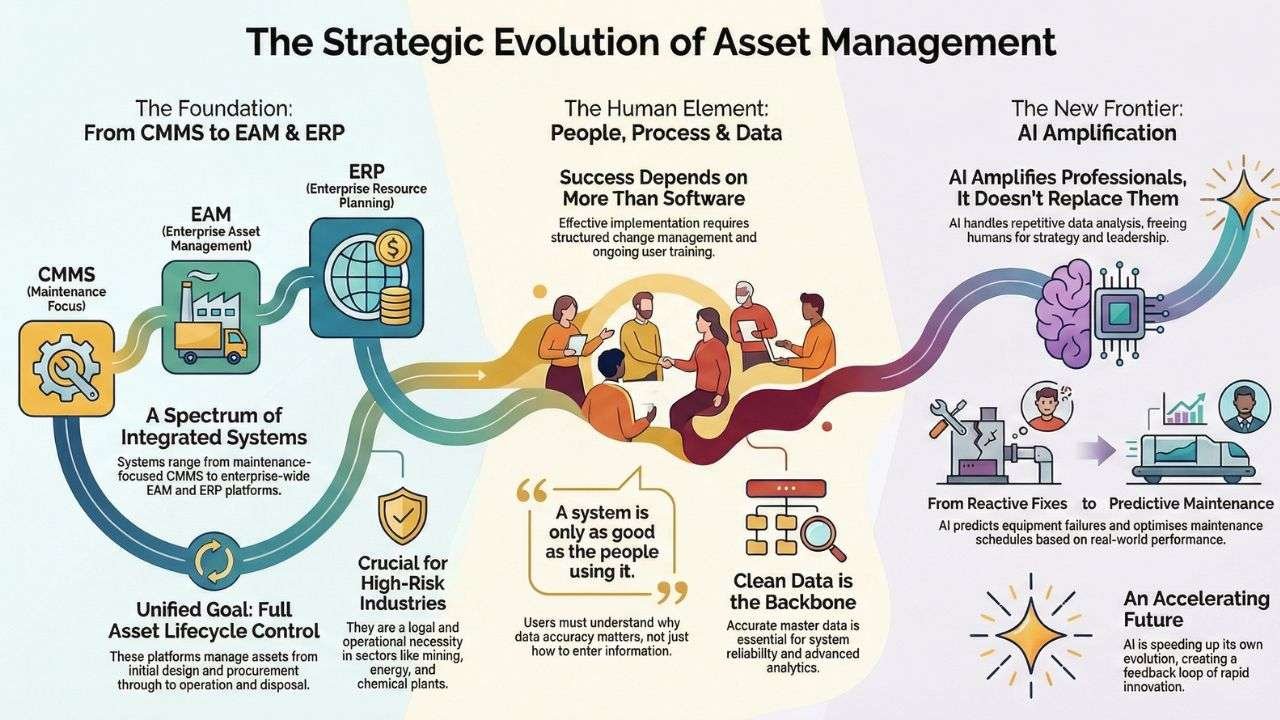
Expanding Beyond CMMS: Why EAM and ERP Matter.
While a CMMS focuses primarily on maintenance execution, an EAM system extends visibility across the entire asset lifecycle, from design and procurement through operation, refurbishment and disposal.
ERP platforms go even further by integrating maintenance with finance, procurement, supply chain and corporate governance.
This broader integration allows organisations to:
- Optimise capital planning by linking asset condition to long‑term financial forecasts
- Improve cross‑department coordination through shared data and workflows
- Strengthen compliance by embedding maintenance into enterprise‑wide audit trails
- Enhance decision‑making with unified reporting across operations, finance and risk
For organisations with complex assets, regulatory obligations, or high‑value equipment, EAM and ERP systems provide the strategic oversight needed to manage risk and maximise asset value.
The Human Element: Training, Adoption and Data Quality.
Regardless of platform, success depends on correct implementation, structured change management and ongoing training across all user groups.
A system is only as good as the people using it.
- Users must understand not just how to use the software, but why data accuracy matters.
- Supervisors must reinforce consistent work order practices and data entry standards.
- Planners and schedulers must be trained to use advanced features rather than relying on spreadsheets or workarounds.
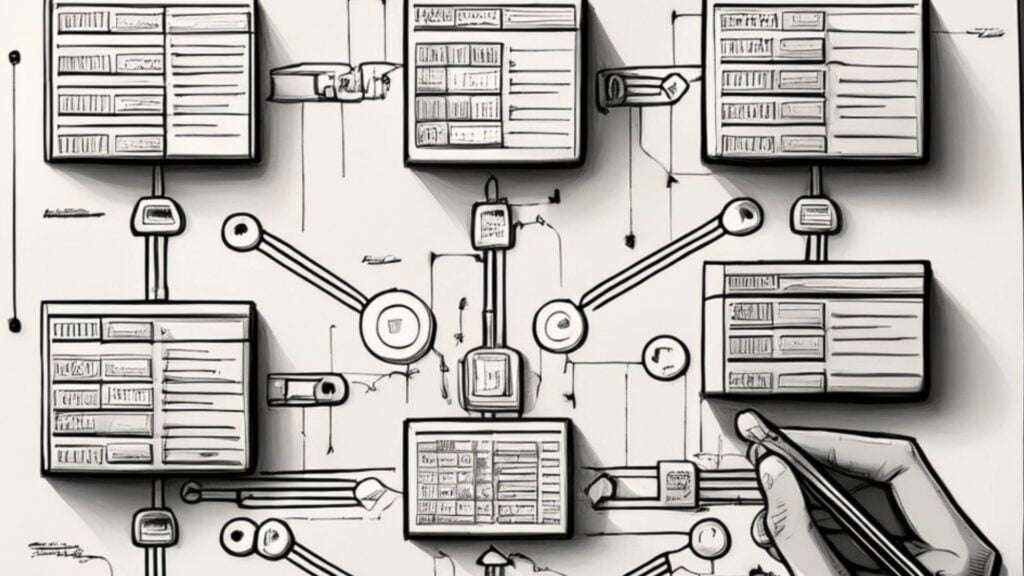
Clean, accurate master data remains the backbone of every CMMS, EAM, or ERP.
Although these systems automate many tasks, they still require regular human oversight to ensure data integrity.
The New Frontier: AI‑Enhanced Asset Management.
The most exciting development for maintenance managers is the rapid evolution of AI‑driven capabilities within asset management software.
These tools are no longer theoretical, they are already reshaping how maintenance teams work.
AI can now:
- Detect and correct master data anomalies such as duplicate assets, incorrect BOMs, or inconsistent naming conventions.
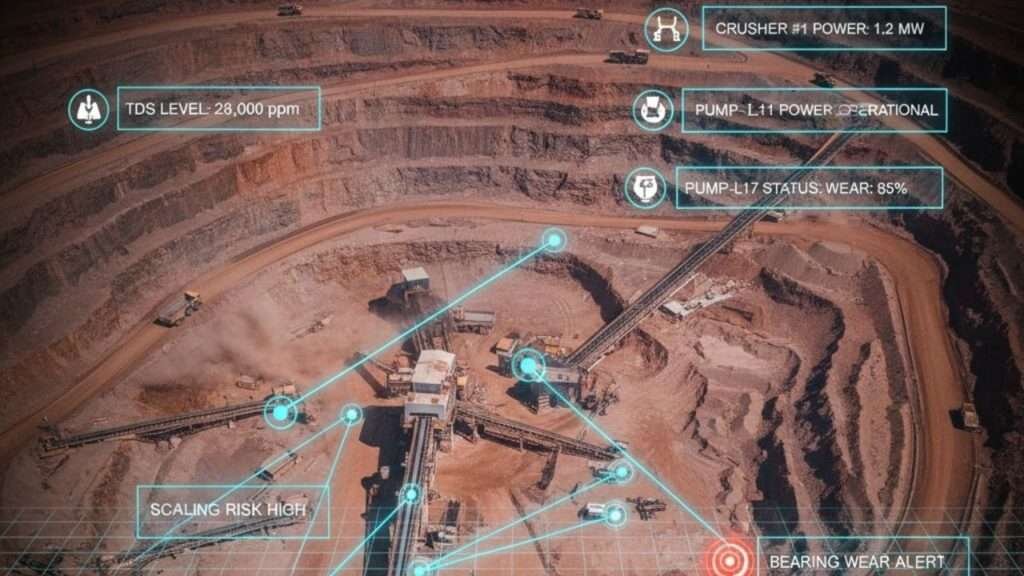
- Predict equipment failures using sensor data, historical work orders and environmental conditions.
- Optimise preventive maintenance intervals based on real‑world performance rather than static OEM recommendations.
- Generate draft work orders, job plans and risk assessments.
- Analyse backlog trends and recommend resource allocation.
- Identify compliance gaps before audits occur.
These capabilities don’t replace maintenance professionals, they amplify them.
AI handles the repetitive, analytical and data‑heavy tasks, freeing planners, schedulers and supervisors to focus on strategy, leadership and continuous improvement.
Why Quality Software Still Matters.
Even with AI, the fundamentals remain unchanged: a high‑quality CMMS, EAM, or ERP system makes it dramatically easier to plan and schedule maintenance, manage materials, track warranties, monitor training requirements and reduce unplanned downtime.
A robust system helps you:
- Maintain compliance with industry standards and regulatory requirements
- Produce audit‑ready evidence in minutes
- Improve asset reliability and extend equipment life
- Reduce operational risk and protect your professional reputation
- Strengthen organisational trust through transparency and consistency
When your asset management platform is implemented correctly, supported by trained users and maintained with clean data, the benefits compound year after year.
Maximising Your Organisation’s Potential.
Investing in a high‑quality CMMS, EAM, or ERP solution and implementing it with discipline, creates a foundation for operational excellence. Combine that with continuous training, strong governance and emerging AI capabilities and your organisation can unlock levels of reliability, efficiency and insight that were impossible only a few years ago.
So, why not take the steps now to ensure your asset management system is fully utilised, future‑ready and positioned to support your operation’s long‑term success.
Quality Asset Management and Best Practice Quality Management.
Pursuing quality in maintenance is not just about doing the work correctly, it’s about building a system where quality becomes the default outcome.
Best practice Quality Management frameworks such as ISO 9001, ISO 55001 and Total Quality Management emphasise consistency, traceability, continuous improvement and evidence‑based decision‑making.
High‑quality asset management software mirrors these principles and operationalises them across the entire organisation.
When a CMMS, EAM, or ERP platform is implemented with discipline, it becomes the backbone of a quality‑driven maintenance culture.
These systems enforce standardised workflows, ensure accurate documentation and provide a single source of truth for asset condition, work execution, materials, competencies and compliance.
In other words, they transform quality from an aspiration into a measurable, repeatable practice.
High‑end EAM solutions take this even further by integrating maintenance with procurement, finance, engineering, risk and corporate governance.
This enterprise‑wide visibility ensures that quality is not confined to the workshop floor, it becomes embedded in capital planning, contractor management, supply chain decisions and long‑term asset strategy.
Every action, from raising a work order to approving a budget, is supported by structured data and auditable processes.
When organisations pursue quality in both their processes and their systems, they give themselves the best possible chance of success.
A well‑implemented EAM platform reinforces quality behaviours, reduces variability and ensures that decisions are based on reliable information rather than assumptions or outdated records.
Combined with AI‑enhanced analytics, these systems now help identify risks, highlight non‑conformances and recommend improvements before issues escalate.
Quality is not an accident, it is the result of intentional design. By aligning best practice Quality Management with high‑quality asset management software, organisations create a resilient, transparent and continuously improving maintenance environment that delivers consistent value year after year.
Quality Asset Management in High‑Risk, Asset‑Intensive Industries.
While every organisation benefits from structured maintenance and reliable data, the value of high‑quality asset management software becomes most apparent in industries where the stakes are highest.
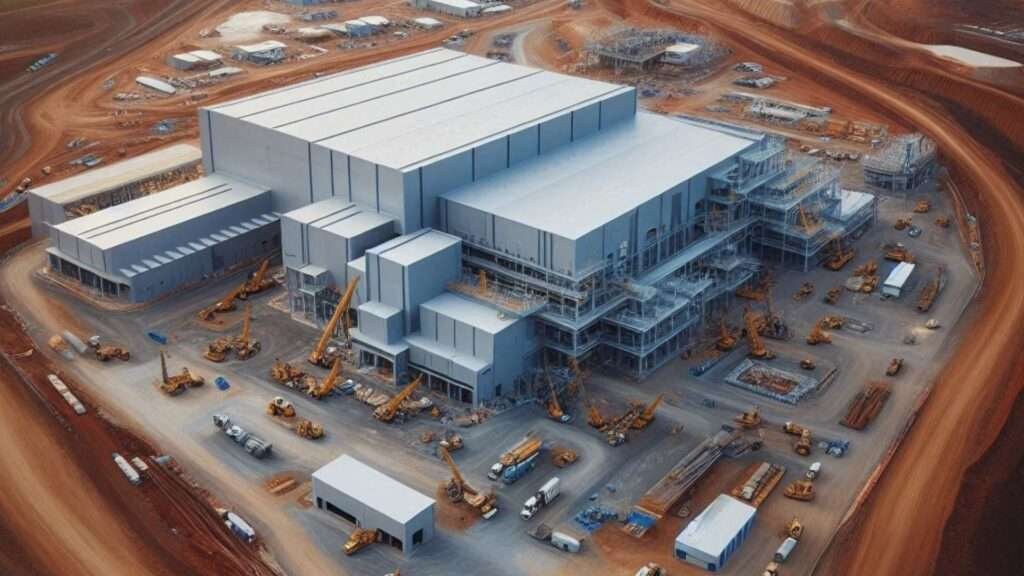
Refineries, smelters, mining operations, oil and gas facilities, chemical plants, power generation sites, and large‑scale manufacturing environments operate under intense regulatory scrutiny and manage assets that can pose significant safety, environmental, and financial risks.
For these businesses, quality is not a “nice to have” — it is a legal, ethical, and operational necessity.
High‑risk industries face a dense network of rules, standards, and statutory obligations. Pressure equipment inspections, hazardous area verifications, confined‑space protocols, isolation procedures, environmental monitoring and competency requirements all demand precise documentation and flawless execution.
A high‑quality CMMS, EAM, or ERP system becomes the central nervous system that ties these obligations together. It ensures that every inspection, permit, certification, and maintenance activity is recorded, traceable, and auditable.
Enterprise‑grade EAM platforms extend this even further by integrating maintenance with engineering, procurement, safety, risk management, and finance. This creates a unified ecosystem where asset condition, operational risk, and compliance status are visible in real time.
When combined with AI‑enhanced analytics, these systems can identify emerging hazards, flag overdue statutory tasks, detect data anomalies, and recommend corrective actions before issues escalate into incidents.
In high‑hazard environments, the pursuit of quality, in processes, data, and systems, directly protects people, assets, and the environment.
Quality asset management software reinforces safe behaviours, reduces variability, and ensures that critical work is performed consistently and correctly.
When organisations in these sectors align best‑practice Quality Management with robust EAM capabilities, they create a resilient, compliant, and continuously improving operation capable of withstanding both regulatory pressure and operational complexity.
The Accelerating Future of Asset Management Technology,
The most remarkable part of this transformation is that AI is now accelerating its own evolution.
Each new generation of AI tools is helping us design, refine, and optimise the next, creating a feedback loop of innovation that moves far faster than traditional software development ever could.
As a result, the future capabilities of CMMS, EAM, and ERP systems are almost impossible to predict with any precision.
The rate of advancement is simply too fast, too interconnected and too dependent on breakthroughs that build on one another in real time.
To accurately foresee where these platforms will be in five or ten years, a person would need to understand more than the most advanced AI models themselves, very much an impossible task.
What I guess we can say with confidence is that the organisations investing in quality systems, clean data and disciplined processes today are positioning themselves to take full advantage of whatever comes next.
In a world where technology is evolving at an exponential pace, quality remains the most reliable foundation for future success.