Storm Water & Sewerage Systems Maintenance
The maintenance of stormwater and sewerage systems is a fundamental, yet often unseen and underappreciated, responsibility shouldered by local governments/shire councils.
This work is complex and multifaceted, involving a regimented schedule of proactive and reactive tasks to ensure these critical infrastructures operate efficiently, protecting public health, the environment and community assets.
The maintenance of stormwater systems, designed to manage runoff from pouring rain and melting snow (for relevant countries), is a continuous effort to manage nature’s flow through man-made channels.
It involves several key tasks focused on preventing blockages, managing vegetation and preserving structural integrity.
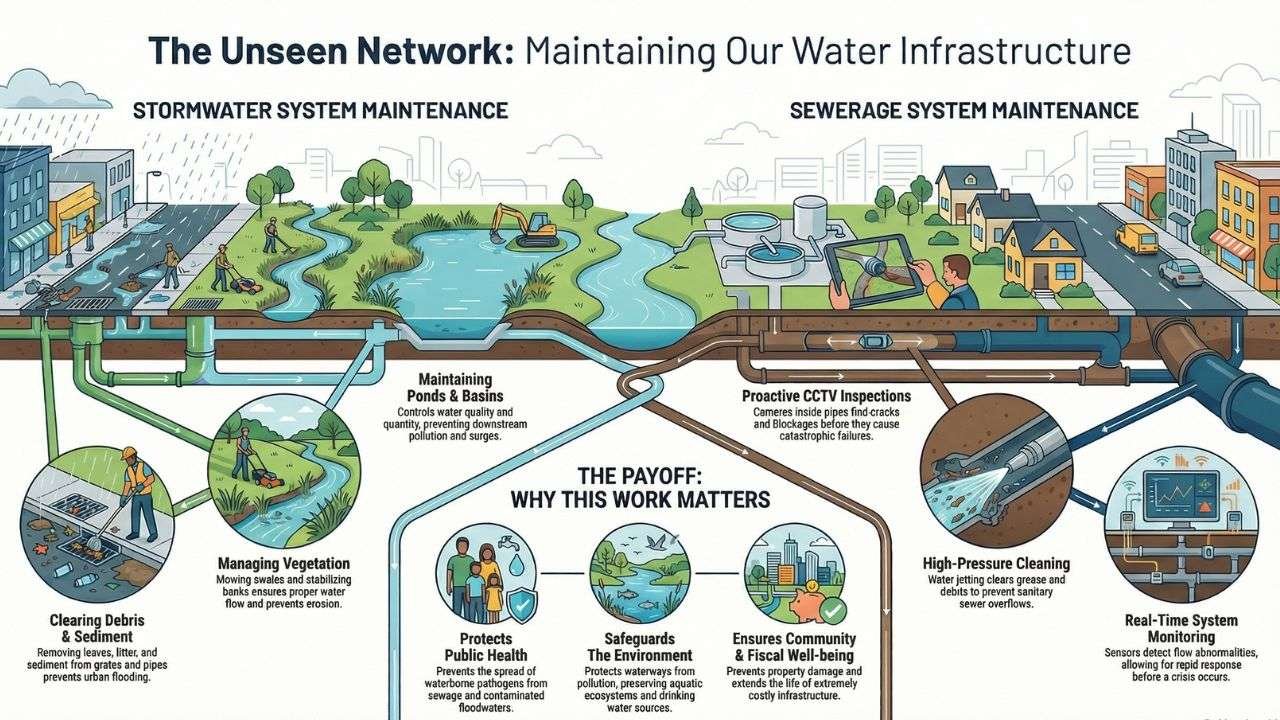
- Clearing Debris and Sediment:
- This is the most frequent and visible maintenance activity.
- Teams regularly remove accumulated leaves, litter, sediment and other debris from stormwater inlets (grates), pipes and culverts.
- This is not merely a cleaning exercise; it is a preventative measure. Blocked grates and pipes force water to seek alternative paths, leading to localized street flooding, property damage and erosion.
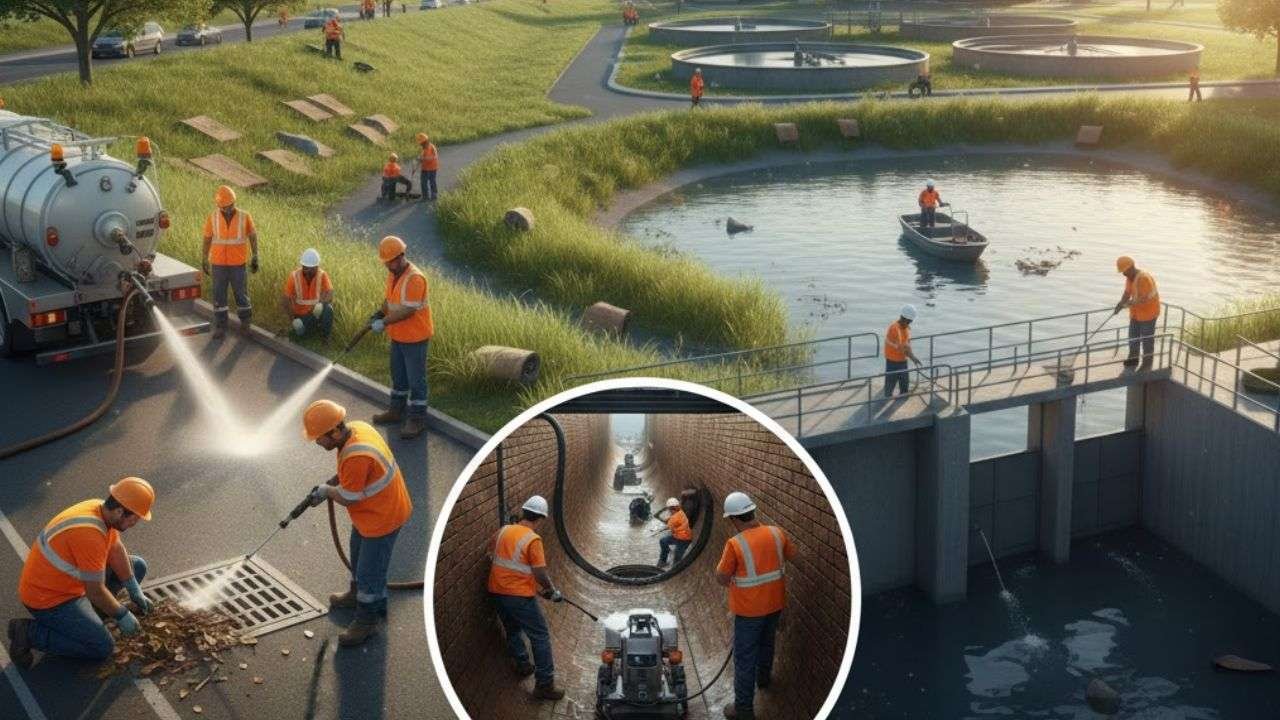
- The work often involves high-pressure jetting to scour pipes, vacuum trucks to extract sediment and manual labor to clear grates, especially before forecasted heavy rain events.
- Ensuring these conveyance pathways are clear is the first line of defence against urban flooding.
- Vegetation Management:
- Green infrastructure is a key component of stormwater systems.
- Regular mowing of grassed swales (shallow, vegetated channels) and buffer areas is necessary to maintain their design capacity for water flow and filtration.
- Overgrowth can significantly slow water passage and become a source of clogging debris itself.
- Furthermore, maintenance crews systematically inspect canals, ditches and embankments for signs of erosion, scour, or instability.
- Vulnerable areas are then stabilized using techniques like erosion control matting, strategic plantings of deep-rooted native vegetation, or sodding.
- This management balances ecological function with hydraulic performance, ensuring the system can handle water volumes without degrading.
- Pond and Lake Maintenance:
- Constructed wet ponds and retention basins are essential for controlling water quality and quantity.
- Their maintenance is crucial for long-term functionality.
- This involves the regular removal of trash and floatable debris from the water surface and banks.
- More involved tasks include managing dead vegetation and accumulated sediment, which, if left unchecked, can reduce the pond’s storage volume and treatment efficiency.
- Inspections also focus on outlet structures, ensuring weirs and pipes are free from obstructions and damage.
- Properly maintained ponds effectively slow runoff, allow pollutants to settle and prevent downstream surges that cause flooding and environmental harm.
Parallel to stormwater management, the maintenance of sanitary sewerage systems, which transport wastewater from homes and businesses to treatment facilities, requires a dedicated, technical approach to prevent failures with severe consequences.
- Inspection and Repair:
- Proactive inspection is the cornerstone of modern sewer maintenance.
- Using specialized equipment like closed-circuit television (CCTV) cameras deployed inside pipes, crews can identify problems long before they cause a collapse or backup.
- These inspections reveal cracks, leaks, joint failures and root intrusions.
- Based on this data, a scheduled repair program is implemented.
- This can involve traditional excavation or, increasingly, trenchless technologies such as pipe lining (curing a new pipe within the old one) or pipe bursting.
- Performing timely, minor repairs based on inspection data is far more cost-effective and less disruptive than addressing catastrophic failures.
- Cleaning and Clearing:
- Even with vigilant inspection, preventative cleaning is mandatory.
- High-velocity water jetting and mechanical augering are used to clear sewer lines of grease buildup, sand, debris and root masses.
- This routine clearing prevents the gradual accumulation that leads to chronic blockages, which are a primary cause of sanitary sewer overflows (SSOs).
- Preventing these spills is critical, as raw sewage in streets, waterways, or basements poses a direct threat to human health and the environment.
- Monitoring and Control:
- Modern sewerage systems incorporate sophisticated monitoring and control systems.
- Flow meters and pressure sensors at key points in the network provide real-time data on system performance.
- This allows operators to detect abnormalities, such as sudden increases in flow indicating infiltration from stormwater or decreases signaling a blockage and respond before a crisis occurs.
- In larger, integrated systems, this data can be used to dynamically control pumps and valves, optimizing flow and preventing overloading of specific trunk lines or treatment plant components.
- Emergency Response:
- Despite best efforts, emergencies such as major pipe bursts, catastrophic blockages, or pump station failures can occur.
- A swift, coordinated emergency response is therefore a critical component of maintenance.
- This involves having clear protocols, dedicated on-call crews and established relationships with emergency services and repair contractors.
- The immediate goals are to contain the hazard, protect public safety and restore service as quickly as possible, minimizing health risks and environmental impact.
The importance of diligent stormwater and sewerage systems maintenance cannot be overstated and its benefits are wide-ranging.
For public health, it directly prevents the spread of waterborne pathogens by containing sewage and controlling stagnant, polluted floodwaters.
For the environment, it protects waterways from contamination by sewage, chemicals and excessive sediment, safeguarding aquatic ecosystems and drinking water sources.
For community well-being, it preserves property values, prevents disruptive and damaging floods and ensures the smooth functioning of daily life.
Furthermore, proactive maintenance is fiscally responsible, as it extends the lifespan of extremely costly infrastructure assets, deferring the need for premature, capital-intensive replacement.
Conclusion.
Through the systematic execution of these tasks, from clearing grates and jetting pipes to CCTV inspections and emergency coordination, local governments play an indispensable role.
Their work ensures the proper, resilient operation of these intertwined systems, which form the backbone of a clean, healthy and sustainable urban environment.
This ongoing, often thankless maintenance is a direct investment in community safety, ecological integrity and public welfare.