Road Maintenance Software

Road Maintenance Software

Roads and highways are the arteries of a functioning society, and nowhere is this truer than in Australia.

They carry us to work, take our families on holidays, and move the trucks that deliver food and fuel to remote communities.

They sustain commerce, support emergency services, and connect towns and cities across vast distances.

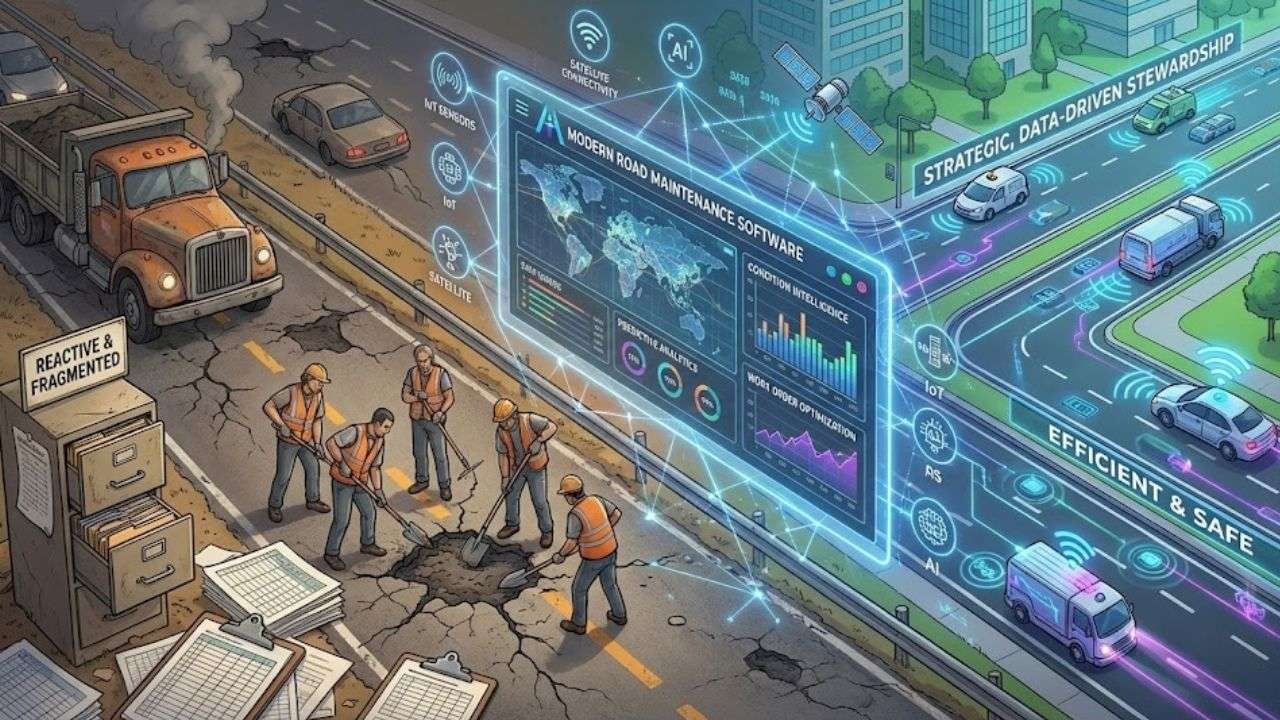
Yet for decades, managing these immense and aging networks has been reactive, fragmented, and chronically under‑resourced.

Backlogs grow, budgets strain, and as you might expect, public frustration becomes inevitable.

A profound shift is now underway. Modern, specialised Road Maintenance Software has emerged, an evolution of traditional Computerized Maintenance Management Systems (CMMS), driven by the age‑old adage that necessity is the mother of invention.

This new generation of software enables councils, road maintenance contractors, and civil engineering firms to move from crisis response to strategic, data‑driven stewardship.

It is not an IT upgrade; it is a fundamental reimagining of how governments and their delivery partners preserve the infrastructure that underpins economic vitality and public safety.

Beyond Spreadsheets: The Power of a Purpose‑Built Platform

Modern Road Maintenance Software is a centralized, intelligent platform engineered specifically for the scale, complexity and accountability demands of public infrastructure.

Unlike generic CMMS tools, it integrates geography, asset lifecycles and operational logistics into a unified digital ecosystem.

At its core, these software products deliver several transformative capabilities:

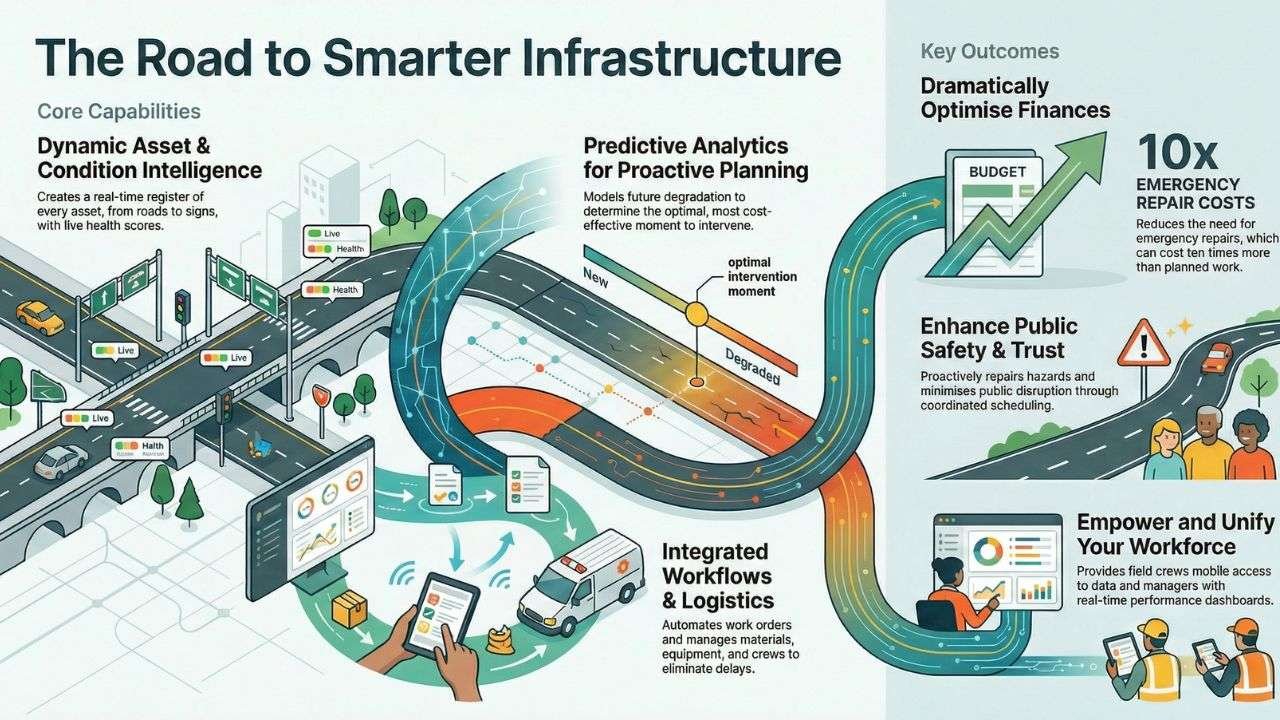
1.       Asset Inventory & Condition Intelligence.

  • They establish a dynamic, accurate register of every asset, from multi‑kilometre road segments to individual signs, culverts and bridges.
  • Inventory is continuously enriched through GPS data, IoT sensors and AI‑powered visual analysis of road scans.
  • Instead of simply cataloguing assets, the software evaluates their condition in real time, assigning health scores based on pavement roughness, cracking, structural integrity and other critical indicators.

2.       Strategic Work Order & Lifecycle Management.

  • Every maintenance activity, whether a pothole repair, resurfacing project, or guardrail replacement, becomes a trackable, optimized workflow.
  • They automate the creation, prioritization and dispatch of work orders across corrective, preventive and predictive maintenance.
  • Crews receive precise instructions, materials and locations, eliminating confusion and delays.
  • Over time, these products build a complete cost and performance history for each asset, enabling lifecycle analysis that identifies the most cost‑effective intervention points.

3.       Predictive Analytics & Proactive Planning.

  • This is where the transformation accelerates.
  • By analyzing historical performance, current condition data, traffic volumes and environmental factors, this software models future degradation.
  • It answers strategic questions that were once guesswork:
    • Which segments will deteriorate fastest?
    • When is the optimal moment to intervene?
    • How can agencies shift spending from emergency repairs to planned preservation?
  • The result is longer asset life, lower long‑term costs and far greater return on public investment.

4.       Integrated Resource & Logistics Management.

  • Effective maintenance depends on having the right materials, equipment and people at the right time.
  • These software products manage inventory levels of asphalt, salt and critical parts, automatically triggering purchase orders before shortages occur.
  • They also schedule and maintain specialized equipment, ensuring snowplows, graders and paving machines are operational when needed.
  • This eliminates costly downtime and prevents project standstills.

Tangible Benefits: From Efficiency to Public Trust.

The adoption of a robust Road Maintenance Software platform delivers measurable improvements across operational, financial and community outcomes:

1.       Eliminating Backlogs Through Data‑Driven Prioritization.

  • Agencies can objectively prioritize projects using a blend of safety risk, traffic impact, asset value and cost.
  • This ensures limited budgets are directed to the most critical needs, systematically reducing maintenance deficits and improving overall network health.

2.       Significant Financial Optimization.

  • Preventive and predictive strategies dramatically reduce the need for emergency repairs, which can cost up to ten times more than planned maintenance.
  • Detailed cost tracking and vendor management prevent overruns and provide transparency for audits, funding applications and long‑term planning.

3.       Enhanced Safety and Reduced Liability.

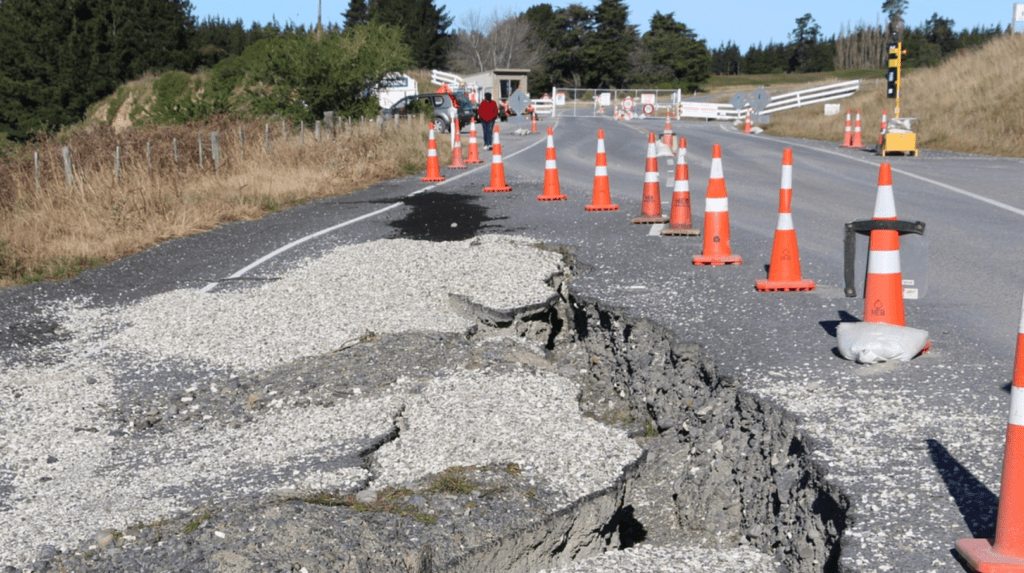
  • Proactive identification and repair of hazards, potholes, faded markings, damaged barriers, directly prevent accidents.
  • A documented, systematic maintenance program also demonstrates due diligence, reducing legal exposure for agencies.

4.       Minimized Public Disruption & Improved Communication.

  • Coordinated scheduling reduces repeated closures and unnecessary delays.
  • Public‑facing portals can share real‑time updates, transforming frustration into informed awareness and strengthening community trust.

5.       Empowered, Accountable Workforces.

  • Field crews gain mobile access to work orders, maps and asset histories, enabling faster, safer and more accurate work.
  • Managers benefit from real‑time dashboards that track progress, costs and performance metrics, fostering a culture of accountability and continuous improvement.

The Road Ahead: Toward a Fully Integrated Infrastructure Ecosystem.

The evolution of Road Maintenance Software is accelerating. Leading platforms are becoming interconnected hubs within broader smart‑infrastructure ecosystems.

They integrate with traffic management systems, weather intelligence and even connected vehicle data.

This enables dynamic, real‑time responses, such as automatically dispatching crews after a flood alert or optimizing winter operations based on hyper‑local storm forecasts.

A New Standard for Responsible Governance.

High‑quality Road Maintenance Software represents a decisive shift from reactive, fragmented management to proactive, holistic asset stewardship.

It equips agencies to master the complexity of their networks, stretch limited budgets further and deliver safer, more reliable transportation for every citizen.

For any governing body responsible for road infrastructure, adopting this technology is no longer a technical consideration.

It is a core component of responsible governance, fiscal accountability and long‑term public service in the 21st century.Road Maintenance Software IG

the essential tasks of shire councils

Essential Tasks of a Shire Council

How Software Helps Shire Councils Deliver Essential Tasks. This article explores the critical role of software solutions in enabling shire […]

Essential Tasks of a Shire Council Read More »

, , , , , , ,
road maintenance with reflect software

Reflect software for shire councils

Reflect Asset Inspection and Maintenance Management Software In 2019, the Civica Group acquired Asset Edge, an Australian-owned software company that

Reflect software for shire councils Read More »

, , , , , , ,
Scroll to Top