Maintenance Performance Improvement

A high class maintenance department is not merely a support function, it is a cornerstone of operational reliability and business excellence.
In modern asset-intensive industries, maintenance has evolved from being a reactive, cost-focused service into a strategic enabler of safety, efficiency and sustainability.
Continuous maintenance performance improvement (MPI) is therefore not an optional enhancement; it is an imperative for the long-term success, competitiveness and compliance of any organization that depends on complex infrastructure or equipment.
Maintenance affects nearly every key driver of business performance.
When equipment availability, reliability and safety rise, production capacity grows, unplanned downtime decreases and operational costs fall.
A high-performing maintenance culture underpins stronger financial outcomes, extends asset lifespan and ensures compliance with environmental, health and safety (EHS) standards.
In essence, maintenance performance is a leading indicator of overall organizational maturity.
The Strategic Role of Maintenance.
Maintenance departments today integrate technical execution with strategic foresight. They contribute to asset lifecycle management, energy efficiency, process optimization and corporate reputation.
Studies from the Australian Productivity Commission and global bodies such as the International Facility Management Association (IFMA) confirm that maintenance can represent 20–40% of total operating costs in asset-heavy sectors. Consequently, every improvement in maintenance efficiency translates directly to measurable business value.
A proactive maintenance function reflects systematic leadership, effective planning and continuous learning.
By embedding structured improvement frameworks, rooted in data, people and technology, maintenance teams become catalysts for enterprise-wide transformation.
The path to sustained improvement relies on five interdependent pillars that form the backbone of maintenance excellence: training and development, performance measurement, preventive and predictive maintenance, strategic technology adoption and continuous quality improvement.
- Training and Development: Building Technical & Analytical Competence.
Technical competency remains the foundation of effective maintenance operations. However, the accelerating pace of technological change, spanning from automation to digital twins, means that the skill sets required are evolving rapidly. Modern maintenance professionals need a hybrid blend of mechanical expertise, digital literacy and systems thinking.
Organizations must therefore treat learning as a continuous investment rather than a periodic event.
Structured training programs should include:
- Hands-on technical refreshers tied to OEM standards and diagnostic techniques.
- Data literacy and analytics training to enable better interpretation of condition-monitoring results.
- Root Cause Analysis (RCA), Reliability-Centered Maintenance (RCM) and Failure Modes and Effects Analysis (FMEA) methodologies.
- Leadership and communication development for supervisors and future managers.
This integrated learning approach enhances not only individual proficiency but also the department’s collective intelligence.
It builds a workforce capable of interpreting patterns, identifying risks before they escalate and applying data-driven reasoning to operational challenges.
- Performance Measurement and Review: Turning Data into Action.
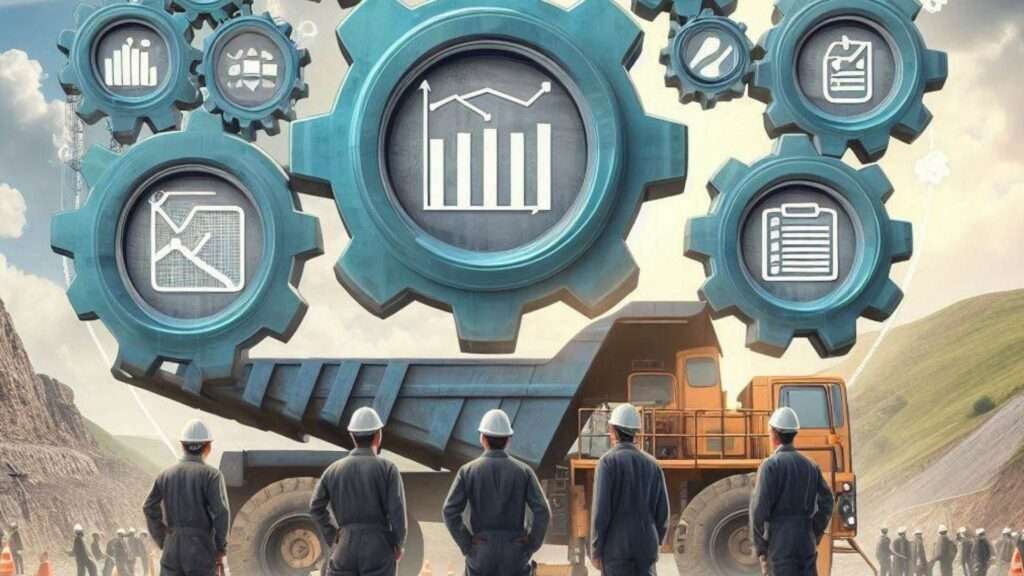
What gets measured gets managed. Sure, you’ve heard that before but effective performance improvement depends on the consistent capture, analysis and interpretation of meaningful maintenance data.
The goal is not to measure for measurement’s sake but to link metrics to actionable insight.
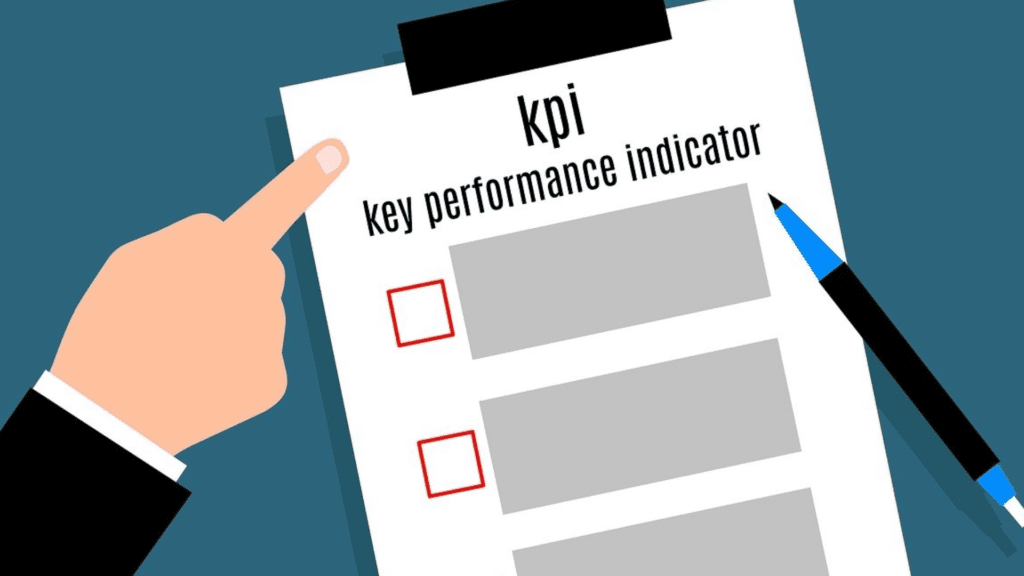
Core Key Performance Indicators (KPIs) typically include:
- Overall Equipment Effectiveness (OEE): Evaluates availability, performance and quality of assets.
- Mean Time to Repair (MTTR) and Mean Time Between Failures (MTBF): Provide visibility into reliability and responsiveness.
- Planned Maintenance Percentage (PMP): Reflects the degree of control over the maintenance workload.
- Preventive Maintenance (PM) Compliance: Measures adherence to schedules that prevent breakdowns.
Regular performance reviews, supported by accurate data and visualized through dashboards or Computerized Maintenance Management Systems (CMMS), help identify systemic inefficiencies.
Benchmarking these results internally and against industry peers encourages accountability and cultivates a culture of transparency.
Performance insights should directly influence decision-making: budget allocation, staff deployment, spare parts optimization and investment in predictive technologies.
Moreover, recognizing and rewarding teams that achieve measurable performance gains reinforces motivation and sustains continuous improvement momentum.
- Preventive and Predictive Maintenance: From Reaction to Resilience.
Transitioning from reactive maintenance (“fix it when it breaks”) to proactive strategies represents one of the largest performance leaps available to organizations.
Preventive and predictive maintenance reduce unplanned downtime, lower repair costs and minimize safety risks.
- Preventive Maintenance (PM) is the scheduled servicing of equipment based on time, usage, or condition thresholds. When guided by manufacturer recommendations and historical data, it systematically prevents failures.
- Predictive Maintenance (PdM) takes this further, employing real-time condition-monitoring technologies, such as vibration analysis, thermography, ultrasonic testing and oil analysis, to anticipate issues before they become critical.
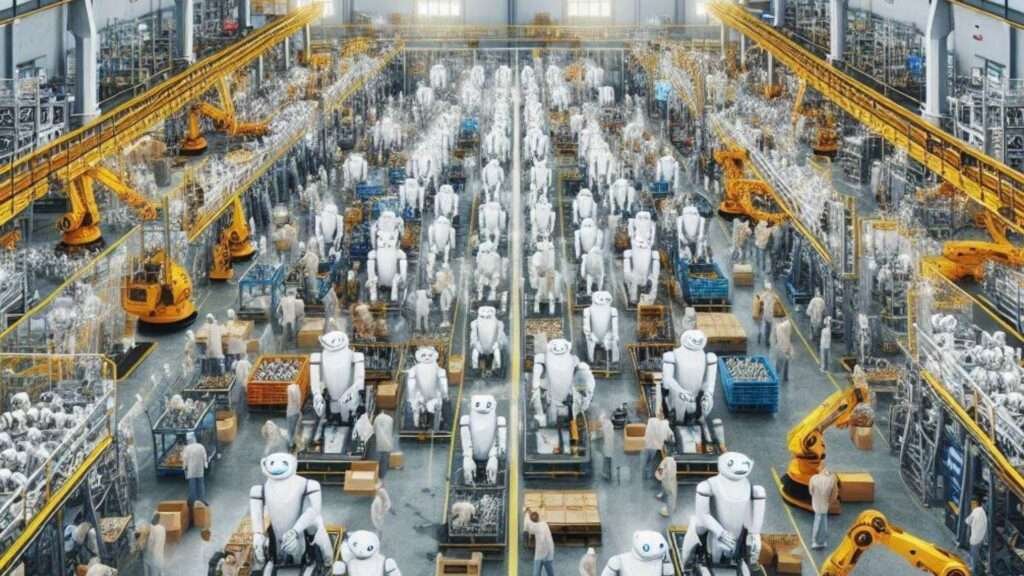
The adoption of these strategies is being accelerated by Industry 4.0 technologies.
By integrating IoT sensors, machine learning models and analytics platforms, maintenance teams can detect subtle deviations in asset performance and schedule interventions with surgical precision.
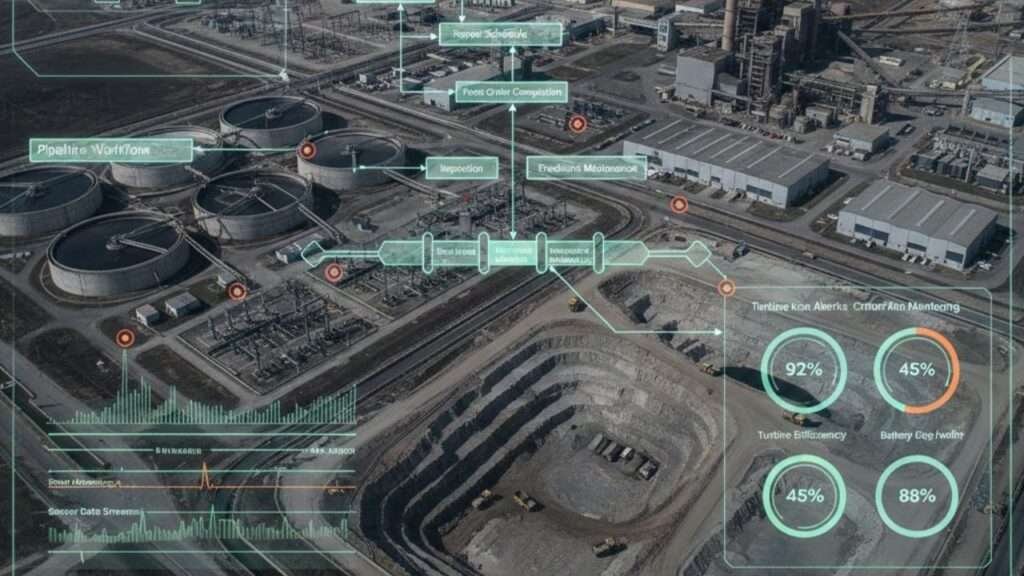
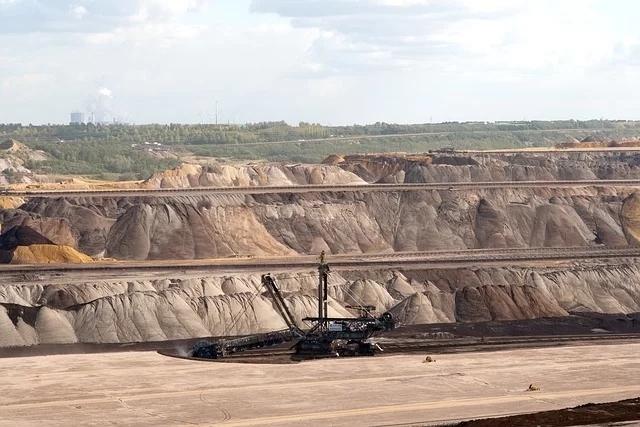
Organizations like Rio Tinto and BHP have already demonstrated the benefits of predictive maintenance in reducing downtime across mining and processing equipment, a model applicable to energy, manufacturing and utilities.
A robust preventive and predictive program not only improves asset reliability but also reduces environmental footprint by minimizing waste, energy loss and unnecessary part replacements, aligning maintenance excellence with sustainability goals.
- Strategic Technology Utilization: Digital Enablers of Efficiency
Technology is the backbone of modern maintenance strategy.
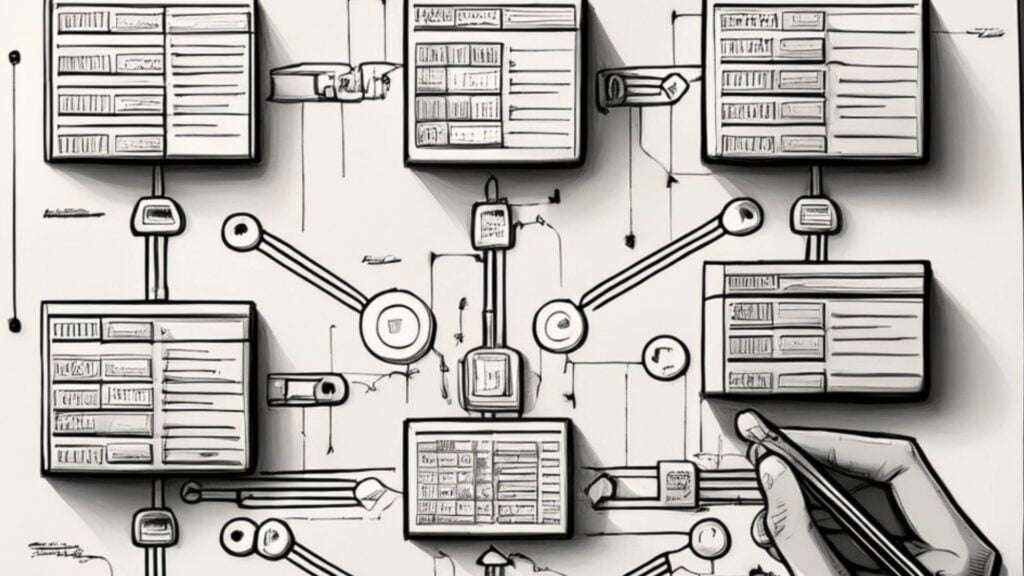
The shift toward digitalized maintenance management has transformed how teams plan, track and optimize their work. Implementing a Computerized Maintenance Management System (CMMS) or more advanced Enterprise Asset Management (EAM) system creates a single source of truth for all maintenance activities, including work orders, asset histories and inventory data.
This digital integration eliminates data silos and enhances efficiency by:
- Automating preventive maintenance scheduling.
- Tracking equipment performance and maintenance costs in real time.
- Streamlining spare parts management through predictive inventory algorithms.
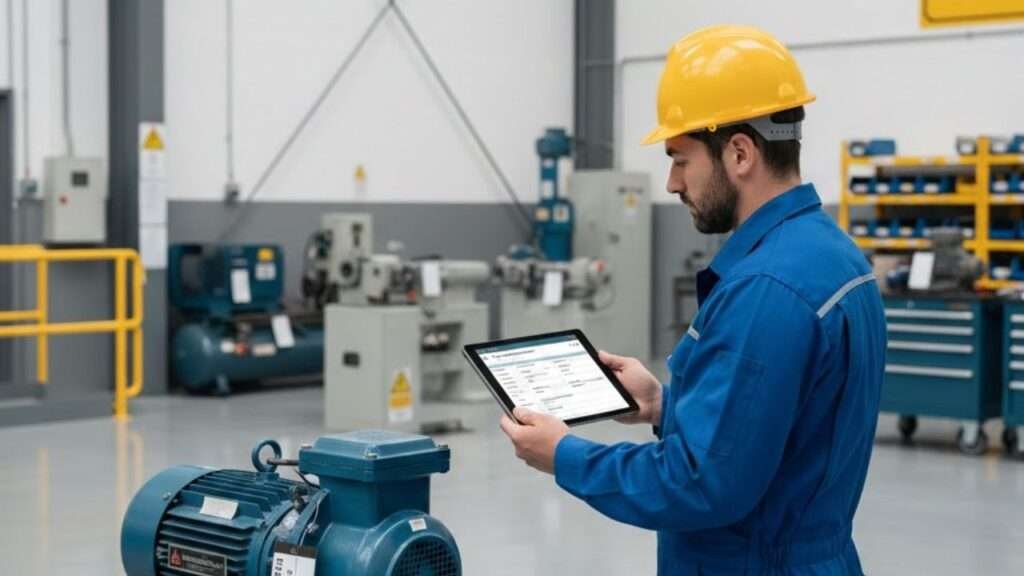
- Enabling remote monitoring and mobile work order management.
When paired with advanced analytics, CMMS data supports predictive models that identify failure trends or cost anomalies.
Artificial intelligence is now being applied to optimize maintenance schedules dynamically, further reducing downtime and extending asset life.
Organizations should also prioritize cybersecurity and data governance as digitalization expands.
Protecting operational technology (OT) systems from cyber threats is essential to ensuring reliability and compliance in regulated industries such as energy, transportation and defense.
- Continuous Quality Improvement: Embedding a Culture of Excellence.
Maintenance performance improvement is not a one-off initiative but an enduring cycle of assessment, learning and refinement.
Embedding continuous quality improvement (CQI) into the organizational DNA ensures that success is sustained, not temporary.
Frameworks such as Lean Maintenance, Kaizen and Total Productive Maintenance (TPM) provide practical methodologies for systematic, incremental enhancement.
These approaches emphasize waste reduction, process streamlining and team empowerment.
They encourage every technician and operator to contribute ideas for eliminating inefficiencies and improving asset reliability.
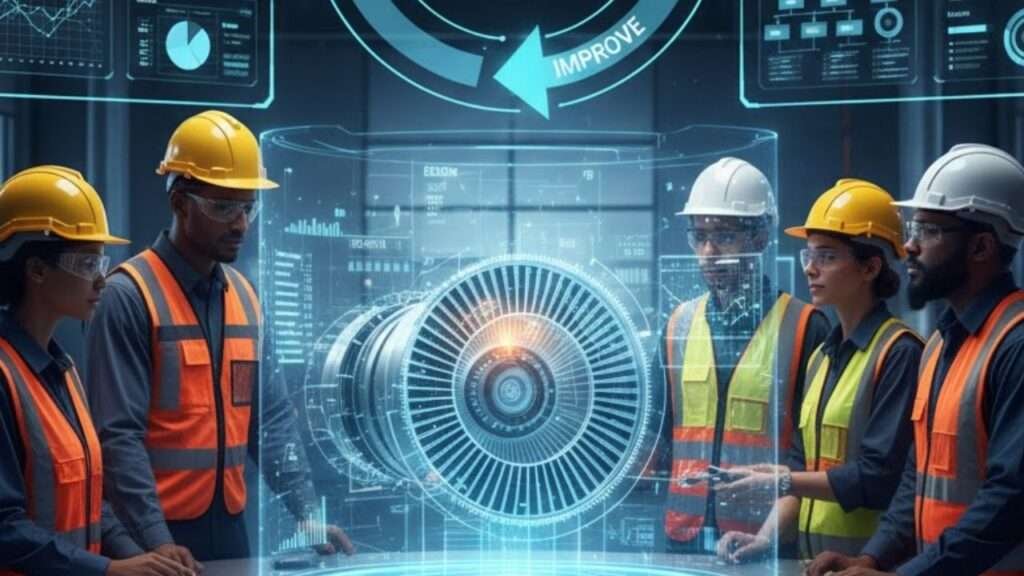
A powerful tool in this context is the feedback loop: technicians report issues, planners refine processes and engineers close knowledge gaps.
Combined with leadership commitment, structured CQI programs transform maintenance departments into innovation hubs.
The goal is perpetual optimization, making every maintenance task not only effective but also smarter than before.
Integrating Safety, Sustainability and Compliance.
Maintenance performance improvement extends well beyond operational metrics, it is also a key contributor to safety, sustainability and regulatory alignment.
Poor maintenance practices often correlate with safety incidents, environmental non-compliance and costly disruptions.
Conversely, proactive strategies support legal and ethical obligations in environmental stewardship and workplace health.
In Australia, for instance, the Work Health and Safety (WHS) Act 2011 and the ISO 55000 Asset Management standards highlight the integral relationship between maintenance management and risk reduction.
Regular inspection, documentation and data-driven preventive actions protect both assets and people, strengthening public and stakeholder trust.
Furthermore, optimizing equipment performance often leads to reduced energy consumption and emissions, linking maintenance performance directly to decarbonization and ESG (Environmental, Social and Governance) outcomes.
This alignment elevates maintenance from an operational necessity to a strategic function at the heart of corporate sustainability.
The Business Impact: Turning Maintenance into Competitive Advantage.
Leading organizations no longer treat maintenance as a reactive expense center.
Instead, they see it as a high-leverage contributor to profitability and resilience. Improved maintenance performance:
- Increases equipment uptime, raising production and service reliability.
- Reduces lifecycle costs and strengthens return on assets (ROA).
- Enhances safety and compliance records, improving reputation and stakeholder confidence.
- Frees capital by reducing emergency repair costs and spare inventory volumes.
- Supports digital transformation by supplying reliable operational data to business intelligence systems.
When effectively managed, maintenance becomes a strategic differentiator, creating a tangible competitive edge.
It aligns operational discipline with business growth, ensuring that every dollar invested generates multiples in efficiency and reliability returns.
Conclusion.
Maintenance performance improvement is not a technical preference; it is a strategic imperative that shapes the future of any asset-dependent enterprise.
Through targeted investment in people, process and technology, organizations can transform maintenance from a background activity into a value-creating engine of reliability, sustainability and profitability.
By embedding continuous improvement principles, empowered leadership and digital intelligence into maintenance culture, businesses position themselves to thrive amid volatility and technological change.
The outcome is not only better-maintained assets but stronger organizations, resilient, adaptive and always improving.